Table of Contents
- Introduction
- What Exactly Is Mercury?
- Historical Uses of Mercury
- Chemical Properties That Make Mercury Unique
- Modern Scientific Applications
- Red, Silver, and White Mercury: What Collectors Should Know
- Authenticity and Safety for Collectors
- Conclusion + Call to Action
1. Introduction
Mercury has fascinated scientists, alchemists, and collectors for centuries. Its liquid-metal appearance, unusual behavior, and rich history make it one of the most intriguing elements on the periodic table. Today, mercury continues to hold scientific, industrial, and even collectible value. Whether you’re drawn to its shimmering metallic surface or its complex role in scientific discovery, learning the facts behind this extraordinary element reveals why it remains a timeless subject of fascination.
2. What Exactly Is Mercury?
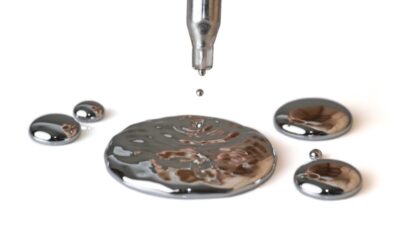
Mercury (chemical symbol Hg) is a naturally occurring chemical element and one of the very few metals that remain liquid at room temperature. Often called quicksilver, it flows like water but shines like metal. It is found in nature primarily as cinnabar ore, from which mercury is extracted through heating and condensation.
Collectors and researchers value mercury for its combination of rarity, purity, and historical importance. Because of its distinctive density and appearance, mercury samples are frequently used in demonstrations, scientific displays, and mineral collections.
3. Historical Uses of Mercury
Mercury’s story stretches back thousands of years:
- Ancient Civilizations: Egyptians used mercury pigments, while the Chinese and Romans applied it in medicines and rituals.
- Alchemy: During medieval times, mercury was believed to be a key ingredient in the mythical Philosopher’s Stone.
- Early Science: Mercury was essential in early thermometers, barometers, manometers, and pressure measuring instruments.
- Mining and Metallurgy: Mercury played a major role in extracting gold and silver through a process called amalgamation.
These historical applications created the foundation for modern chemistry and material science.
4. Chemical Properties That Make Mercury Unique
Mercury’s scientific allure comes from its remarkable physical and chemical properties:
- Liquid Metal at Room Temperature: One of only two elements that remain liquid under standard conditions.
- High Density: Objects can float or sink dramatically in mercury because it is 13.6 times denser than water.
- Excellent Conductivity: Although liquid, it conducts electricity like a solid metal.
- Forms Amalgams: Mercury can mix with many metals, forming unique metallic solutions.
- Reflective Surface: Its shiny metallic appearance makes it a favorite for collectors.
These unusual properties make mercury a standout in scientific demonstrations and research environments.
5. Modern Scientific Applications
While many industries have reduced mercury usage due to safety regulations, it still plays a role in controlled scientific and research settings:
- Electrical switches and relays
- Scientific calibration instruments
- High-precision barometers and vacuum pumps
- Laboratory reagents
- Specialized lighting devices
Collectors and researchers often seek high-purity mercury samples for study, display, or historical preservation.
6. Red, Silver, and White Mercury: What Collectors Should Know
Collectors often refer to three notable forms of mercury in scientific and display contexts:
Silver Mercury
The pure metallic form of mercury—shiny, reflective, and fluid. This is the most recognizable and widely collected type.
Red Mercury (Symbolic/Collectors’ Variant)
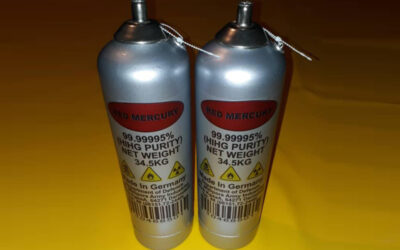
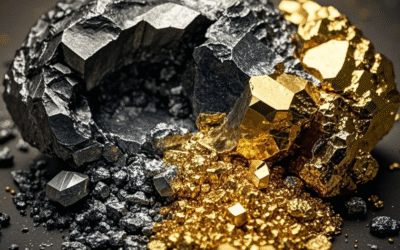
In science, “red mercury” is not a standard elemental form but typically refers to mercuric iodide, a red crystalline compound used in research. In collectible contexts, it is often presented as a vibrant, ruby-colored mercury derivative for display purposes.
White Mercury
A term sometimes used to describe mercuric chloride or symbolic collectible samples with a white, pearlescent appearance. These are typically research-grade compounds or curated display materials.
These variants—when properly labeled—are valued by collectors for their visually distinct appearances and historical associations.
7. Authenticity and Safety for Collectors
Authentic mercury products should always come with:
- Purity certification
- Proper chemical labeling
- Secure, sealed, lab-grade containers
- Safety data sheets (SDS)
When sourced responsibly, mercury samples—whether silver, red, or white—can serve as excellent additions to a scientific or mineral collection.
All products should be strictly for research, display, or collectible purposes, never for unregulated use.
8. Conclusion + Call to Action
From ancient alchemy to modern laboratories, mercury remains one of the most scientifically captivating elements known to humanity. Its unique behavior, striking appearance, and long history ensure that collectors continue to treasure it.
Get your certified mercury samples now and experience the science and beauty behind this remarkable element.